Skillbuilding and Awareness Can Help Create Inclusive Shared Micromobility
by Odochi Akwani, Writer and Content Manager
February 19, 2026
People with disabilities benefit from tailored outreach and training programs, according to a study by Collaborative Mobility UK (CoMoUK).
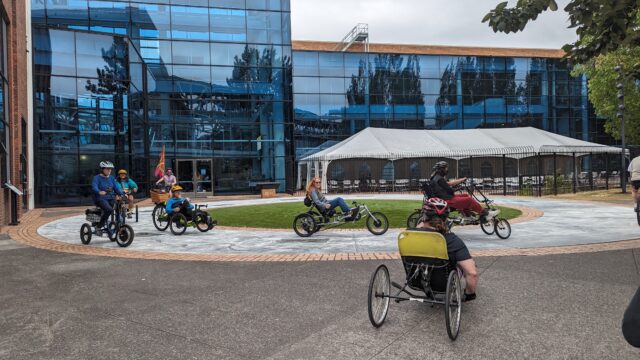
Photo courtesy of Adaptive BIKETOWN from their Ride with a Buddy event in 2023
Last January, CoMoUK released research that examined the challenges faced by people living with a disability when accessing shared micromobility and explored areas for improvement. To build on the research, the group also launched a pilot project in 2025 to increase access to shared micromobility for people living with a disability by partnering with micromobility operators, local authorities, and community groups in Salford, England. The pilot’s goal was to raise awareness and build skills among people living with disabilities when navigating e-bikes and e-scooters.
The pilot, carried out by Cycling UK and funded by The Motability Foundation, worked with 41 training participants and 47 respondents to a social media campaign. Participants engaged in a total of 15 in-person training sessions focused on building confidence and practical skills using shared micromobility devices already in operation across Salford, including Lime and Beryl. The sessions took place over four months.
One of the key findings from the pilot outlined in their report, Increasing the Use of Shared Micromobility by Disabled People, was to use existing networks to reach the disabled community.
The pilot found that there’s a lack of awareness about shared micromobility within the disabled community, with 71% respondents saying they hadn’t used it before. Education on how e-bikes can be useful is important for users who may think they are unable to use them due to their disability. 51% of participants heard about the training through word of mouth or emails sent to local groups they are a part of. In Portland, the Portland Bureau of Transportation (PBOT) partnered with local disability groups as well as elder advocacy organizations to organize an adaptive bike community working group to gather input on community needs before launching Adaptive BIKETOWN.
Check out the full report for stakeholder recommendations aimed at governments, operators, and local authorities.
The report concludes with advice on how anyone can create similar initiatives in their community through intentional training design, marketing and promotion, and training delivery.