A Letter to Shared Micromobility
by Tangier Barnes Wright, Deputy Director of Shared Micromobility
June 23, 2026
The impact of the Better Bike Share Partnership on the micromobility industry and on me.
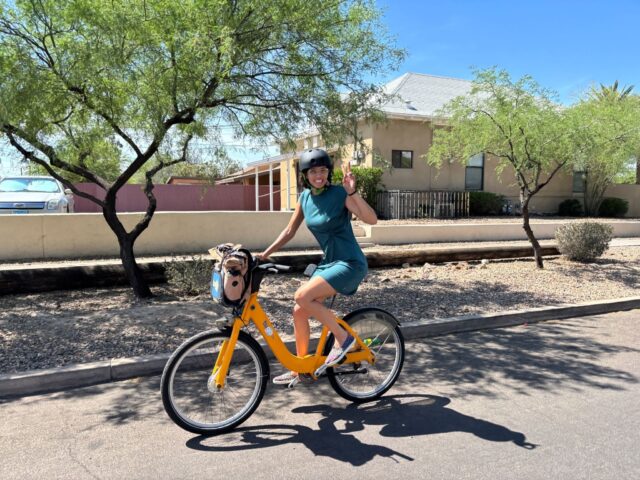
I don’t know when exactly I fell in love with shared micromobility.
Maybe it was first learning that equity in bike share mattered to people and that many people were working hard to achieve it. Maybe it was feeling, for the first time, the passion people had for creating access to bike share as a public service. Maybe it was getting to know our first cohort of diverse Living Lab grantees — convening with them in Guadalajara during the 2022 NABSA conference and again in Chicago where we learned from local youth who were organizing for mobility justice.
Maybe it was the many bike rides with new friends and colleagues in new cities, fumbling through unfamiliar docking stations and navigating friendly and unfriendly roads together. Or maybe it was seeing the way bike share attracts and embraces an incredible variety of smart, dynamic, empathetic, resourceful, and fun people.
Maybe it was pausing to realize that I was working in partnership with and surrounded by other people like me — people who are interested in improving cities so that everyone can thrive, and doing that work with bikes and scooters as our tools.
Bottom line: I fell in love with all of it. And I know that the work of BBSP over the last 12 years has meant so much to so many people. Looking back on my 5+ years in shared micromobility, I am sometimes overcome with emotion — thinking about the relationships I have because of shared bikes and scooters. And how I ended up being part of something far more meaningful and bold than I could have ever imagined. Shared micromobility is so much more than docks, vehicles, and metrics. It’s people and culture.
Before BBSP, I was absolutely an advocate for bike share and I rode bike share in every city I visited. But I didn’t know the extent to which bike share was having a positive impact on the lives of people of color, low-income people, and people who need more transportation options. I also didn’t know there were so many people devoting their time to ensuring everyone could access and afford to ride shared bikes and scooters. It became obvious pretty quickly that shared micromobility is a unique and beautiful space.
There is power in shared micromobility. Power in the number of people choosing shared bikes and scooters over cars. 225 million trips were taken in North America using shared bikes and scooters in 2024. Each trip represents a choice to effectively reduce carbon footprint, reduce toxic emissions, and connect more intimately with the environment and people around us. There is power in shared micromobility because it is a versatile, reliable, sustainable mode of transportation. I have had the pleasure of witnessing the ways that shared micromobility builds community and helps people see that getting around without a personal car is possible.
For me, shared micromobility has been a place where my worlds of social and environmental justice and urban planning come together. It has also meant camaraderie, joy, spaces where I get to show up as myself, and connections to other community-focused, social justice people. People who know that shared bikes and scooters are tools for enhancing connectivity, resilience, happiness, and health.
My love of shared micromobility comes not only from my many positive experiences being a part of this family, but is in large part due to the impact that BBSP has had on communities across North America. It is hard to capture everything BBSP has meant to everyone, but this is my letter to shared micromobility, the people in this field, and why BBSP matters:
We made equity the norm
When we launched in 2014, very few — if any — shared micromobility systems offered equity programs such as discounted memberships or community engagement programs aimed at breaking down barriers for communities of color. Fast forward a decade and 92% of shared micromobility systems offer discount programs, with many more having equity offerings beyond discount programs — smartphone alternatives, cash payments, targeted outreach, and equitable vehicle distribution.
The Better Bike Share Partnership helped make equity programs the norm through grants, technical assistance, and peer learning opportunities. We awarded $2.6 million in support of hands-on outreach, education, and the equitable design and implementation of shared bike and scooter programs in communities of color.
We told the stories
In addition to helping the industry widely adopt and implement equity programs, BBSP has helped others replicate successful equity work being done. This is due in part to our robust storytelling efforts. Since BBSP began, our writers have published more than 500 stories dedicated to uplifting the people and programs credited with advancing equity in shared micromobility. As a result, programs across the country have replicated a lot of great work.
“We have read stories about adaptive programs, connections between transit and bikeshare, low-income programs, partnering with local governments, and employee benefits incentives, among many others. As a small non-profit, it would be so much harder for us to find the time to research these initiatives if not for the tireless reporting done at BBSP.” – Survey Respondent
“BBSP has had an outsized influence on our organization goals. We use guidance and best practices directly from BBSP to help guide station siting, pricing, and communications strategies.” — Survey Respondent
We funded the work
While our storytelling widely distributed ideas and best practices, other BBSP program areas directly put more people of all ages and backgrounds on shared bikes and scooters. The people we fund through our two grant programs implement innovative and creative social impact programs focused on education and outreach in partnership with communities of color and socially vulnerable communities. In a single 6-month grant period in 2025, eight mini-grantees taught more than 100 new people how to use their local shared micromobility system.
In my time at BBSP, we awarded 79 mini grants and nine Living Lab grants. Since BBSP’s inception in 2014, we have awarded 125 total grants. We can safely say that in just the last handful of years, BBSP successfully increased ridership in communities of color nationwide by the thousands.
Here’s a sample of what we’ve heard from people who participated in programs carried out by our mini grantees:
“The equity membership program allowed me to ride for fitness and mental health purposes without having to worry about the cost and not being able to afford it after losing my job. I am very grateful and appreciative for the wonderful people at This Machine as well as the donors and sponsors of this program for your generosity, compassion and kindness.” — Event Participant, Tulsa, Oklahoma
“It is a vital means of transportation, physical and mental fitness. If I did not have access to Bublr bikes, I honestly would’ve moved away.” — Bublr Access Pass user, Milwaukee
In 2021, I helped launch BBSP’s first cohort of Living Lab grantees. Through our Living Labs we:
- Broke down barriers to accessing and riding bike share for communities of color.
- Increased capacity for community-based organizations, nonprofits, and local government–run bike share systems to engage more deeply in underserved communities — capacity increases that resulted in neighborhood-wide engagement campaigns, riders of all ages, plus new and sometimes unexpected partnerships that are still strong today.
- Witnessed significant professional and personal growth of bike share staff and Living Lab project managers as a result of being part of the cohort and having the opportunity to showcase their work on the national stage.
Beyond grants given, BBSP helped:
- Write and publish 16 best practice guides for breaking down barriers to bike share in communities of color.
- Increase racial diversity at national conferences such as NABSA and NACTO by directly funding participation and speaking opportunities.
- Contribute to critical resources such as NABSA’s Workforce Diversity Toolkit.
- Contribute more than $100,000 to increase equity and inclusion content at national NABSA and NACTO conferences.
We brought people together
BBSP’s Shared Micromobility Roundtable and the Transportation Justice Fellowship made it possible for shared micromobility and transportation professionals to come together regularly as thought partners working to advance equity in transportation. We graduated 43 fellows and hosted 14 national Shared Micromobility Roundtables.
Whether virtual or in-person, our roundtables made it possible for transportation professionals to meet with peers across North America and discuss emerging best practices, lessons learned, and ongoing challenges. Participants were rewarded with healthy doses of motivation and reminders of why our work is important and why we stick with it.
Our Transportation Justice Fellowship successfully grew the skills, knowledge, and confidence of people of color in the transportation field, guiding them to develop the tools to stay in this field and to grow in their positions and double down on their mobility justice approach to planning.
We built a family
Our programming and the work of our grantees clearly had positive impacts on the lives of people who use shared bikes and scooters in communities across the country. Our work also had positive impacts on city staff, operators, providers, people designing and implementing programs, community advocates, ambassadors, and activists.
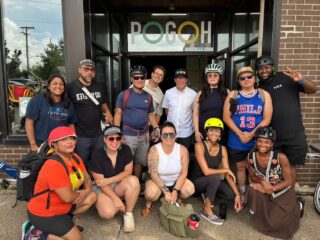
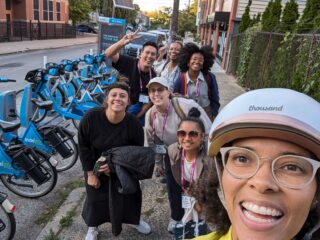
We truly cultivated a family with our grantees and other partners. It has been an honor to design and host gatherings and implement programs that so intimately touch people’s lives and livelihoods.
People come to BBSP as a source for ideas and best practices, and they stay connected because of the camaraderie, the inclusiveness, and for the rooms that we open — where they can be themselves and bring up the issues impacting their communities.
I have had the tremendous honor of helping grow and be a part of this social fabric for almost six years. It’s exciting to think about where shared micromobility will be in another 6 years. Although BBSP as we know it is coming to an end, I am confident that the programs we have funded, our many partners, fellows, and grantees will continue shaping equitable transportation — and will have an even bigger stage down the road.
A heartfelt thank you to PeopleForBikes, the Indego Bike Share team in Philadelphia, NACTO, and NABSA for bringing me along for the ride. And to my colleagues and friends in cities across North America, you inspire me and you allowed me to learn and grow with you in the process. Thank you.
Ride on friends! And please stay in touch!
I will be in my current role at PeopleForBikes until the end of July after which point my plans remain open. Let’s work together!