Equity in Shared Micromobility is a Practice: BBSP SMM Roundtable Recap
by Odochi Akwani, Writer and Content Manager
April 14, 2026
Takeaways from the BBSP 2026 Shared Micromobility Roundtable in Tucson.
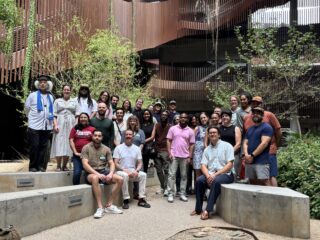
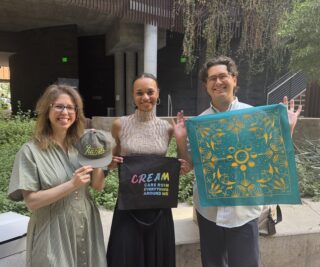
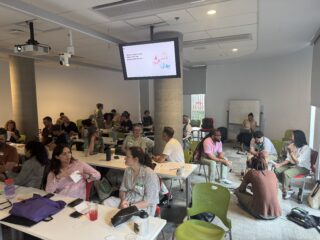
Shared micromobility practitioners from across 20 different cities recently came together in Tucson for BBSP’s annual Shared Micromobility Roundtable. Generously hosted by the City of Tucson, a Living Lab grantee, we were excited to gather at the roundtable in person for the first time since 2019. Led by NACTO, the National Association of City Transportation Officials, attendees gathered at the beautiful University of Arizona campus to discuss strategies to sustain shared micromobility systems that benefit people and communities while exploring and learning about the city of Tucson.
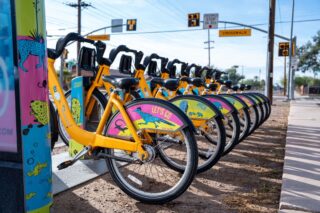
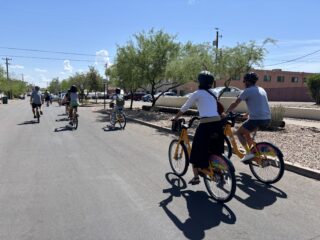
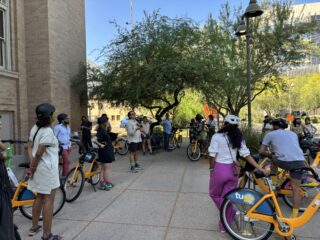
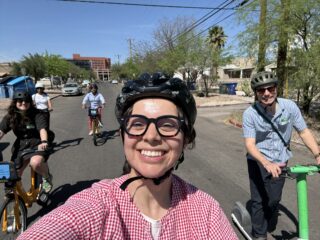
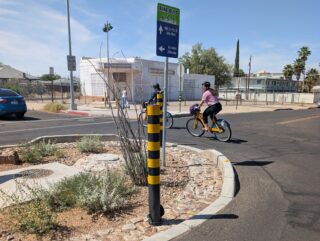
On the first day, we enjoyed a tour of Tucson’s bike network, learning about the array of unique bicycle and pedestrian traffic signals, including the HAWK/BikeHAWK Traffic Signal (High-intensity Activated crossWalK), the TOUCAN Traffic Signal (TwO groUps CAN), and the PELICAN Traffic Signal (PEdestrian LIght Control ActivatioN). Additionally, we learned about Tucson’s approach to Green Stormwater Infrastructure (GSI) and how it creates shade and cools buildings, improving the environmental quality for desert living. Ben Elias and Collin Chesston from the City of Tucson and Brooke Bushman and Blue Baldwin from Tucson Water’s Storm to Shade Program guided participants through a roughly 5-mile ride covering nine Tugo Bike Share stations and recently completed bike projects.
The roundtable had four main focuses: sustainable program structures, reliable access to infrastructure, financial accessibility, and community knowledge. Below is a recap of what was shared and learned in each session.
Shared micromobility program structures
We heard from many cities and systems about working with limited staff and resources and how it’s common for city workers to split their time between shared micromobility and other work. The unfortunate reality is that, in practice, shared micromobility is not a priority for many cities. Local governments may say it’s high on their list, but budgets don’t demonstrate that. Clean/green infrastructure funding is what some practitioners are turning to for longer-term financial sustainability. There’s no one way to do it “right.”
Reliable access to physical infrastructure
In this session, the group was dispersed between docked and dockless shared micromobility systems, which have unique needs regarding physical infrastructure. Those representing dockless systems discussed rebalancing strategies when devices move into central business districts during morning commutes and never make their way back out to the broader service area. Fleet requirements in specific zones work to address this, but data is necessary to decide these areas. App opens provided by operators can help determine where people open the operator app, yet don’t follow through with a ride, to locate areas where those devices are needed. Similar conversations were had with docked systems, where station density can be hard to determine for similar reasons. Network expansion is critical, but matching that same effort with programming expansion goes hand in hand.
Financial accessibility
Doug McClintock, executive director of Cincinnati Red Bike, the city’s non-profit station-based bike share system, spoke candidly about funding issues the system faced back in 2023, which led to a temporary closure. McClintock shared how they had to get creative to find sustainable funding solutions to keep Red Bike alive as a public service. Red Bike recently announced a new partnership with Shelterhouse, a shelter for those experiencing homelessness, to help oversee the system’s equity pass, Go Pass. Through this shared oversight, Red Bikes aims to relieve some of its administrative strain while strengthening reporting in order to continue offering this pass, which encompasses more than 50% of its annual rides.
Additionally, Red Bike began working more closely with the city’s transit agency, Cincinnati Metro, which helped legitimize conversations around supporting bike share in the city.
“Your system isn’t broken because it’s not paying for itself, ” McClintock says. Shared micromobility is a public service just like trash pick up or buses and trains. “It’s not about profit-maxxing.”
Take a trip to the Queen City this October and learn more about Red Bike as they host the 2026 NABSA Annual Conference.
Community knowledge
BBSP Living Lab grantees Tugo Bike Share, Indego Bike Share, Los Angeles Walks, and POGOH Bike Share presented and discussed the different ways they are leading with community-based planning and implementation efforts. Tugo Bike Share is working on a community-led planning effort to reallocate its services to serve the south and west sides of Tucson more equitably. In Pittsburgh, POGOH’s Living Lab looks to address low ridership across its bike share system and a lack of awareness of the system in the city’s Homewood neighborhood. As Metro Bike Share in LA expands its network from downtown to the west, the Los Angeles Living Lab Coalition, consisting of Metro Bike Share, Bike LA, Los Angeles Walks, Walk ‘n Rollers, and CicLAvia, is working to promote local involvement and trust in bike share for those new communities. As a longstanding Living Lab city, Philadelphia’s Indego Bike Share continues to prioritize equity in the expansion of its Indego bike share system. The impact reports of their work over the past two years will be released next month, so stay tuned!
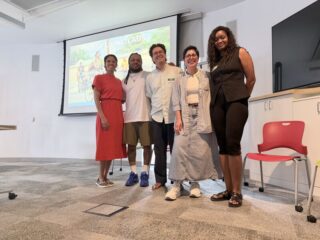
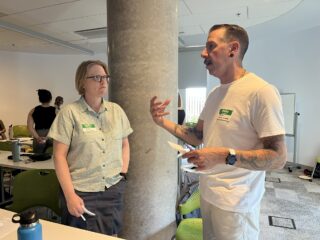
Tucson Vice Mayor Lane Santa Cruz and Vanessa Gallego from Familias Unidas Ganando Accesibilidad (FUGA) closed out day two of the gathering. FUGA is a grassroots coalition that uses bicycling to create community and mobilize around issues. Fuga means “a leak” in Spanish, and according to Cruz, they like to think of themselves as a leak in the system as they take ownership of their streets through two monthly community bike rides in the Southside and Westside of Tucson, advocating for a more accessible and connected city. It was a reminder to all of us why we do this work and to do it with humility.
Thank you to the City of Tucson for hosting us!